The concept of “meal prepping” or “batch cooking” has become hugely popular. But does it actually work? If you’re looking to consistently eat healthy, save hours of cooking time weekly, reduce last-minute grocery runs, and minimize dining out, then yes, establishing a meal preparation system is highly recommended.
My own journey to mastery began out of necessity in grad school when I realized a simple step—making five servings of oatmeal at once—was the key to consistent healthy eating. Years later, I’ve refined the process into a reliable system.
Here are my five essential tips for anyone looking to become a meal-prep master:
1. Establish a Core Set of Go-To Recipes
Relying on a collection of simple, healthy recipes that you genuinely enjoy prevents burnout and makes planning easier, especially on weeks when you feel uninspired. The goal is to make the process effortless, not exhausting.
Example Staple Meals:
- Breakfast: A simple, high-protein smoothie (e.g., Berry & Yogurt Blend).
- Lunch: A hearty, creamy vegetable soup (made in a large batch).
- On-the-Go: A nutritious, layered grain salad (e.g., Lentil & Feta Salad).
- Dinner: A customizable power bowl (e.g., Roasted Root Vegetable Bowl).
- Treat: A simple fruit-based dessert (e.g., Chocolate-Dipped Bananas).
2. Create a Smart, Prioritized Grocery List
Before any food preparation begins, an efficient trip to the store or market is mandatory.
- Audit Your Kitchen: First, check your pantry, fridge, and freezer to use what you already have, saving time and money.
- Maximize Ingredients: Plan dishes that allow you to use a single ingredient—like a large batch of quinoa or rice—for multiple, varied meals (e.g., a cold cereal breakfast, a salad lunch, and a dinner side).
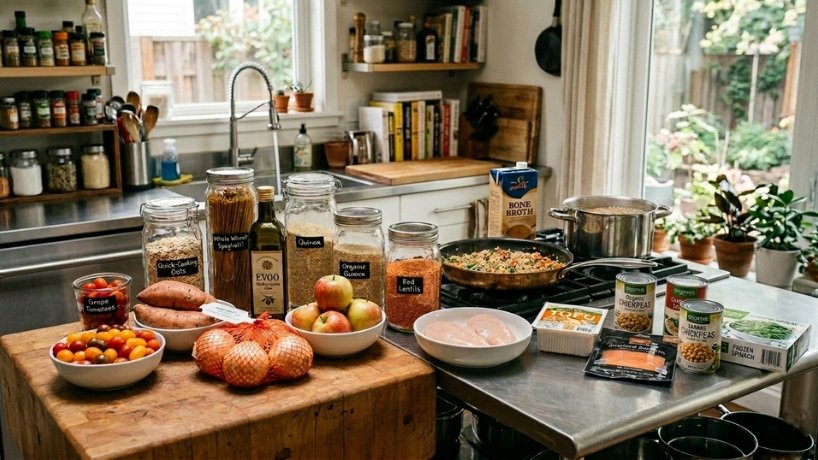
- Optimize Storage: Ensure you have enough containers. Use glass containers or bento boxes for individual lunches and dinners. Mason jars are perfect for storing sauces, dressings, hummus, or large batches of grains.
- Time Your Shopping: Choose a time when the store is least crowded (like early Saturday morning) to make the experience quick and low-stress.
3. Multitask and Streamline Your Cooking Process
Efficiency in the kitchen is about utilizing all resources simultaneously. Don’t cook meals one after the other; be strategic with your appliances.
- Maximize Heat Sources: While ingredients are boiling or steaming on the stovetop, use the oven to roast vegetables, bake sweet potatoes, or make granola.
- Batch Prepare: While things are cooking, use downtime to chop produce, blend dressings or sauces (like pesto or almond milk), or prepare any raw ingredients.
- Start Small: If you’re new to this, don’t attempt too many new recipes at once. Begin by mastering one or two dishes for the week until the steps become second nature.
4. Build Up Your Fridge Contents Gradually
Avoid the pressure of prepping an entire week’s worth of food instantly. Instead, identify the meal that is currently your biggest hurdle and conquer it first.
- Target Your Weak Spot: If skipping breakfast is common, use your prep time to make a week’s supply of baked muffins or individual overnight oats. If lunch is the issue, pre-chop greens and veggies into containers and make a batch of dressing.
- The Key is Incremental Change: Begin by prepping just one meal type. Once that routine is solid, you can gradually increase your efforts until your fridge is stocked with various pre-cooked components ready for creative assembly.
5. Prioritize Component Prep Over Full Assembly
The most significant time-saver is preparing components that you can quickly assemble later in the week, ensuring meals taste fresher and preventing food fatigue.
- Set Aside Prep Time: Dedicate a specific, manageable block of time (e.g., 2–3 hours on a Saturday) to cook only the base components: batch-cook your grains (rice, quinoa), hard-boil eggs, wash and chop greens, and prepare sauces.
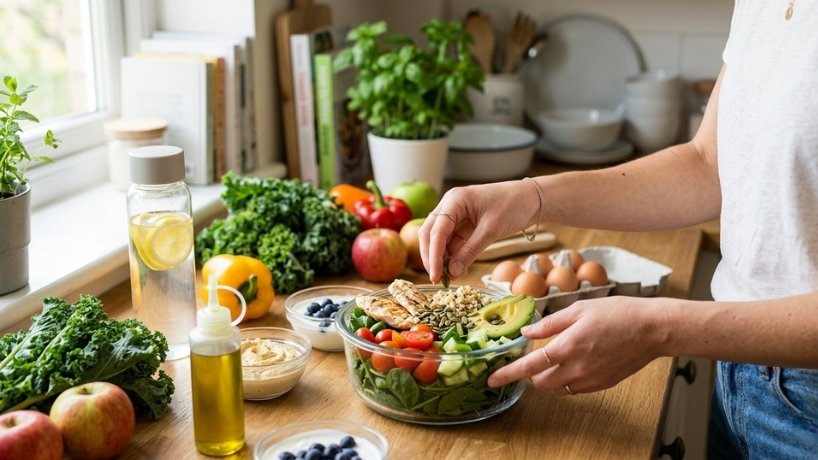
- Build Later: Do not combine the ingredients until the day you plan to eat them. This prevents ingredients like salads or cooked protein from getting soggy or mushy.
The Best Benefit: Think of meal planning as an investment. Once I’ve mastered my prep session (which now takes me under three hours), I’ve reclaimed significant time and energy to dedicate to other life priorities—like exercise, relaxation, reading, or spending time with loved ones. That extra time is the ultimate reward.