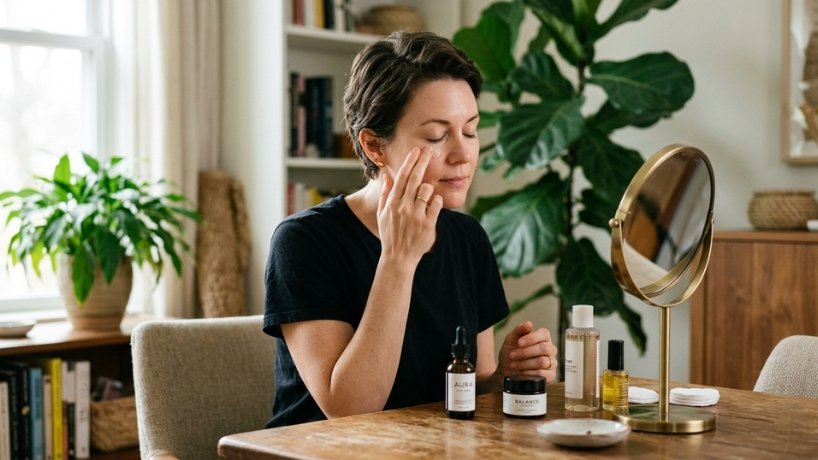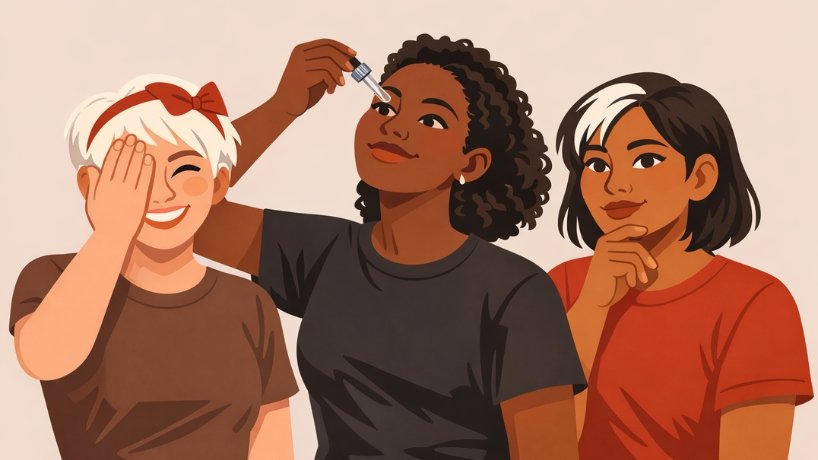
Walk through any major city today and you’ll see an incredible range of skin tones, textures, and features. This diversity is part of everyday life—yet the way we classify and understand skin hasn’t fully kept up.
If we want better care, better products, and fair outcomes, our approach to skin needs to reflect the real variety of people in the world today.
Why Skin Classification Needs to Evolve
In healthcare and the beauty industry, skin has often been grouped using systems created decades ago. While these frameworks were useful at the time, they don’t fully represent the broad spectrum of skin we see now.
Modern understanding requires more than tradition—it requires accuracy, inclusivity, and real-world relevance.
How Traditional Systems Work
Historically, skin has been categorized based on how it responds to sun exposure—how easily it burns or tans.
This approach has been widely used for:
- Planning certain treatments
- Assessing sun sensitivity
- Developing skincare products
- Guiding clinical decisions
It offered structure, but it was based on a limited population and doesn’t capture global diversity.
Where These Systems Fall Short
Although still commonly used, older classification methods have clear limitations.
1. Subjective Input
Many classifications depend on personal interpretation, which can lead to inconsistent or inaccurate categorization.
2. Narrow Focus
They primarily consider sun reaction, while ignoring other important factors such as:
- Sensitivity
- Inflammation
- Pigmentation patterns
- Environmental responses
3. Limited Representation
Reducing skin into a few categories overlooks the wide variation in tone, undertone, and behavior.
Why This Matters in Real Life
These limitations aren’t just academic—they affect real outcomes.
For example:
- Certain treatments may behave differently across skin tones
- Some conditions appear differently depending on pigmentation
- Professionals may not be equally trained across all skin types
This can lead to gaps in care and inconsistent results.
Beyond Healthcare: Wider Impact
Skin classification also influences areas beyond medicine, including:
- Technology and AI systems
- Media representation
- Product development
When systems are based on limited data, they may fail to accurately represent people with diverse skin tones.
A Better Way to Understand Skin
Skin should be viewed as a continuous spectrum, not a fixed set of categories.
It is shaped by:
- Genetics
- Environment
- Lifestyle
- Individual biology
Separating skin characteristics from assumptions about identity is also important. Skin tone alone does not define a person’s background or experience.
Steps Toward More Inclusive Skin Care
Improvement requires progress across multiple areas.
In Medicine
- Develop more inclusive classification models
- Expand research across diverse populations
- Train professionals to treat all skin types confidently
In Skincare Industry
- Create products for a wider range of needs
- Provide clearer and more inclusive guidance
- Test products across diverse skin types
In Education
- Update learning materials to reflect real diversity
- Encourage a broader understanding of skin health
A Shift in Thinking
The goal isn’t to discard older systems entirely—but to improve them.
By building on existing knowledge and expanding it, we can create approaches that are more accurate, practical, and inclusive.
Final Thoughts
Skin is complex, diverse, and constantly influenced by internal and external factors.
Understanding it requires moving beyond limited categories and embracing its full range.
When we do that, we move closer to a future where:
- Care is more accurate
- Products are more effective
- Everyone feels represented
Progress in skin science isn’t just about better results—it’s about recognizing and respecting human diversity.